What is an Intervention? A Guide - Spero Recovery Center
When overcoming addiction, interventions stand out as powerful tools for initiating change and guiding individuals toward the path of recovery. This compassionate yet assertive approach aims to break through denial, fostering awareness about the impact of addiction on both the individual and their relationships. Interventions serve as pivotal moments that encourage individuals to seek help, offering them a chance to embark on the transformative journey of recovery.
Interventions are used to address a range of issues, including substance use, drug addiction, alcohol abuse, compulsive eating, substance use disorder, mental health disorders, and other behavioral or psychological disorders.
Our Colorado rehab also plays a crucial role in guiding individuals toward lasting recovery. At Spero Recovery Center, men beat their addictions through the completion of our 12-step program in Colorado and receive life-long guidance through our alumni program and events. Learn more about how interventions and our addiction recovery program can help you.

Guide To Interventions: What Are They And Do You Need One?
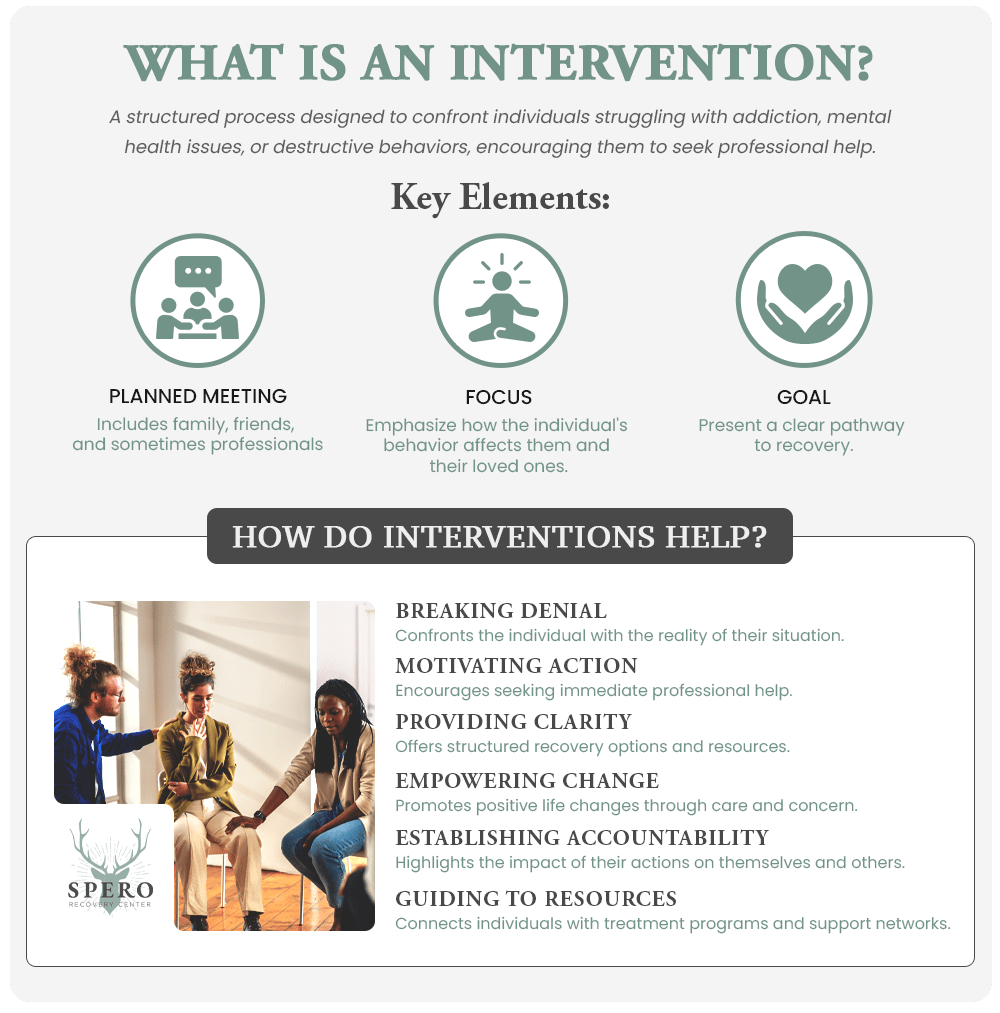
An intervention is a structured process aimed at confronting an individual struggling with addiction, mental health issues, or harmful behaviors, usually to motivate them to seek help and enter a residential addiction treatment program or outpatient treatment. The act of intervention is a deliberate confrontation, where the person is confronted about their substance use, alcohol or drug problems, or other destructive actions.
Interventions often involve a group of people who are closely involved with the subject, such as family, friends, and sometimes professionals, to maximize the effectiveness of the process.
Interventions promote recovery from substance use disorders by:
- Breaking denial: Interventions confront addiction realities, aiding acknowledgment of the situation’s severity.
- Structured support: By establishing a planned environment for expressing concerns and fostering recovery networks, interventions provide structured support.
- Motivating action: Interventions prompt seeking professional help and entering treatment promptly, often reaching a critical point where the individual is encouraged to accept treatment.
- Providing clarity: These conversations outline clear recovery pathways, aiding individuals in overcoming challenges.
- Empowering change: Interventions foster positive life changes and self-directed recovery journeys through care and concern.
- Establishing accountability: By highlighting impacts on themselves and loved ones, interventions encourage accountability and help families recognize the point at which they can no longer control the individual’s behavior, but can motivate them to seek treatment.
- Guiding to resources: Interventions offer treatment information and connections, offering addiction recovery resources.

Talk With Our Team
No commitment, no judgment. Reach out and let's figure out the next step together.
Call (303) 900-3994 Or fill out our contact formWhen Is The Right Time To Stage An Intervention For Substance Abuse?

You don’t need to wait for a crisis to start planning an intervention meeting. It’s important to seek help for addiction or substance use disorders swiftly after noticing there may be a problem. For friends, other family members, and loved ones, knowing when to stage an intervention can make a huge difference in your loved one’s recovery.
Recognizing triggers and warning signs is pivotal in intervention planning. This process entails discerning specific situations, dangerous situations, emotions, or environments that may precipitate addictive behaviors. By pinpointing these triggers, loved ones and professionals can tailor interventions to effectively address underlying issues.
Selecting the right moment for an intervention demands meticulous consideration of the individual’s readiness and circumstances. Timing is critical to ensure receptiveness and effectiveness. It may involve observing behavioral patterns, assessing the individual’s mental and emotional state, and consulting with professionals to ascertain the most opportune moment for intervention.
If you are unsure when to have the meeting, consult an addiction professional for help.
Early intervention holds paramount significance in treating substance abuse effectively. It thwarts the escalation of addiction, diminishes the risk of severe physical and psychological consequences, and enhances treatment outcomes. By intervening early, individuals can get help and treatment before their substance addiction becomes deeply ingrained and they suffer severe consequences.
How Can You Plan And Execute A Successful Intervention?
Before staging an intervention, it’s crucial to conduct thorough research and plan meticulously. This involves gathering information about the individual’s situation, understanding intervention techniques, and organizing logistics. Decide how you want to conduct the meeting and ensure each team member is on the same page. You may research specific techniques, such as the Johnson Model or Arise Model, and identify what may work best to facilitate a successful meeting.
Choosing the intervention team is pivotal. It should include close family members, supportive friends, and possibly intervention professionals or mental health professionals. Each member brings unique perspectives and care, contributing to a comprehensive and compassionate approach to recognizing the individual’s struggles.
Be sure that each person present on the team, whether they be an interventionist or family member, has a proper education for the situation and shares a goal of improving the struggling person’s life.
A confrontational approach will likely not be effective. Establishing a nurturing and non-confrontational environment is essential for the intervention’s success. Create a space where the individual feels respected, loved, and encouraged to be open and receptive to the intervention’s message. Emphasize empathy, understanding, and encouragement to foster a collaborative spirit that increases the individual’s willingness to seek help and begin the journey to recovery.
What Are The Differences Between Professional And Family-Led Interventions?
There are a few major differences between a professional interventionist and a family member leading an intervention. Of course, in professional interventions, interventionists organize the meeting, which brings in expertise on addiction treatment, psychology, and an objective perspective of the situation.
Family-led inventions, on the other hand, are organized by loved ones, and while these individuals lack formal training, they bring an intimate understanding of the history and personality of the person who needs the meeting. These types of interventions are often more emotional.
Exploring Collaborative Approaches: Combining Professional Guidance With Family
Alternatively, interventions can combine both family-led and professional interventionist techniques, leading to:
- Comprehensive Support: Integrating both professional expertise and familial support offers a well-rounded approach to intervention and recovery.
- Expertise and Understanding: Professional guidance provides specialized knowledge and objectivity, while family support contributes intimate understanding and emotional connection.
- Increased Effectiveness: The synergy between professional guidance and family support maximizes the effectiveness of interventions, addressing the individual’s needs from multiple angles.
- Holistic Approach: Collaborative approaches recognize the importance of both professional and familial influences in the recovery journey.

A Community That Heals and Empowers
The sense of community we foster at Spero Recovery enables our clients to feel comfortable and teaches them interpersonal skills. We want to create a safe environment for our clients; our goal is to provide a space where they can become the people they have always wanted to be.

Expert Clinical Treatment
At Spero Recovery, men receive comprehensive clinical care for addiction in a supportive residential environment. Our licensed clinicians work closely with each client through weekly individual therapy and regular group sessions focused on accountability, emotional growth, and relapse prevention.

Hands-On Healing and Life Skills
We also offer experiential programming, including hikes and other outdoor activities. We also have a full woodworking shop. Inviting specialists onto the premises, such as meditation teachers and chefs, is one of our favorite things to do. Our goal is to teach our guests essential life skills and the importance of building relationships.
What Components Should Be Included In A Well-Structured Intervention?
A well-structured intervention should include:
- Clear Goals And Expectations: Establishing clear goals and expectations is crucial for intervention success. It defines specific objectives for the intervention, such as encouraging the individual to seek treatment or commit to behavioral changes. Clear goals help focus the intervention and guide participants toward a common purpose, increasing the likelihood of a positive outcome.
- Effective Communication Techniques During The Intervention: During the intervention, employing effective communication techniques is essential for conveying concerns, expressing love, and encouraging the individual to seek help. Active listening, empathy, and non-judgmental language can facilitate constructive dialogue and promote understanding between the individual and intervention participants.
- Information about Treatment Options and Resources: Equipping the individual with information about available addiction recovery programs in Colorado and resources is vital for facilitating their journey towards recovery. This includes educating them about various treatment modalities, rehabilitation programs, and support groups tailored to their needs.
How To Have an Intervention that Fosters Compassion And Positive Reinforcement

To ensure a productive, compassionate environment for an intervention, consider the following tips:
- Cultivate Compassion and Empathy In Interventions. Fostering compassion and empathy in interventions is essential for creating a supportive atmosphere. By understanding the individual’s struggles and demonstrating empathy, intervention participants can establish trust and encourage openness.
- Consult an Interventionist. Even if you’re planning on a family-led meeting, getting the advice of an interventionist or other mental health or addiction recovery professional is valuable. They can provide tips and advice for the entire family.
- Use Positive Reinforcement and Supportive Language. Using positive reinforcement and supportive language reinforces the individual’s progress and fosters a sense of encouragement and hope. Affirming achievements and strengths helps build confidence and motivation, reinforcing the individual’s commitment to change and facilitating their addiction recovery journey.
- Offer Treatment Options. It’s helpful if you research treatment centers before the intervention occurs. That way, you and your intervention team can suggest specific solutions to their substance abuse issue before it gets worse.
- Address Resistance and Emotional Reactions with Empathy. Recognizing resistance and emotional reactions with empathy validates the individual’s feelings and concerns while offering support and understanding. By acknowledging their emotions without judgment and empathizing with their perspective, intervention participants can effectively navigate resistance and emotional barriers, fostering a collaborative environment for positive change.
What Support Systems And Follow-Up Plans Should Be In Place After An Intervention?
- Enrolling in a residential treatment program
- Attending regular therapy sessions
- Participating in support groups like Alcoholics Anonymous or Narcotics Anonymous
- Exploring holistic approaches such as yoga or mindfulness practices
- Maintaining open communication channels
- Attending family therapy sessions
- Encouraging self-care practices
- Seeking guidance from support groups or counseling services
- Regular check-ins with the individual
- Assessing the effectiveness of treatment plans
- Consulting with professionals for guidance
- Adjusting interventions or treatment approaches as necessary
Intervention FAQ
Review the answers to these frequently asked questions to plan a successful intervention for mental health or addiction.
The purpose of an intervention is to confront an individual struggling with addiction or destructive behaviors in a supportive manner, encouraging them to seek help and enter a treatment program.
To prepare, start by researching intervention techniques, then select a supportive team, and plan the logistics of the intervention.
During the intervention, loved ones express their concerns and offer help to the individual, encouraging them to accept help and enter treatment.
If the individual becomes angry or resistant, the interventionist helps manage emotions and steer the conversation back to a constructive path.
Expected outcomes include the individual agreeing to seek treatment, entering a rehabilitation program, and beginning the recovery journey.
Contact Spero Recovery Center for Help
At Spero Recovery Center, accessing crucial addiction resources is just a step away from fostering transformative change. Loved ones seeking to guide individuals towards addiction treatment in Colorado can find a wealth of information through Spero’s comprehensive services.
From informative materials and counseling sessions to tailored treatment plans, Spero Recovery Center equips families with the tools they need to navigate the challenging terrain of addiction recovery. The compassionate staff at Spero understands the importance of including loved ones in the healing process, providing guidance on effective communication and care strategies.
If you’re ready to take the first step towards helping someone you care about find recovery, contact us at Spero Recovery Center today. Our dedicated team is here to assist you on the journey towards healing and renewed hope.


With over two decades of experience since beginning his career in 1996, Marty has worked extensively across the United States, contributing significantly to clinical leadership teams at multiple reputable organizations including The Hazelden Betty Ford Foundation and the Caron Foundation. Marty’s commitment to patient care has established him as a pillar within the national behavioral health treatment community. He frequently collaborates with industry leaders to discuss and advance treatment strategies. Throughout his career, Marty has successfully managed, developed, and implemented specialized services in behavioral health, mental health, and addiction treatment.